I love “Baseball Reference” (baseball-reference.com) and am enthralled by the work they have done to preserve baseball history.
Now maybe, some new type statistics caused a two run home run by the eventual losing team, that put said team up by a run to be placed ahead of a similar two run home run in importance, with the big difference being it put the eventual winning team ahead to stay.
Their order of game’s important plays below:
r Pitcher wWPA wWE Play Description
t5 2-3 2 1– RR ATL Orlando Cepeda Nolan Ryan -29% 39% Home Run; Carty Scores
b5 3-4 1 1– RR NYM Wayne Garrett Pat Jarvis 29% 70% Home Run; Ryan Scores
b4 1-2 0 1– RR NYM Ken Boswell Pat Jarvis 23% 69% Home Run; Shamsky Scores
t1 0-0 1 1– RR ATL Hank Aaron Gary Gentry -18% 32% Home Run; Gonzalez Scores
b3 0-2 1 — R NYM Tommie Agee Pat Jarvis 11% 40% Home Run
Same 5th inning “Cha Cha’s” (Cepeda) blast put Atlanta (Braves) down (2-0) in that ’69 NLCS, ahead by 1 (4-3), while Wayne Garrett’s homer put the Mets ahead (5-4) in an eventual (7-4) pennant clinching win, en route to the title.
Clearly Garrett’s 2RHR was more important than Cepeda’s. Far more clear, Baseball Reference (baseball-reference.com) did a superb job and I, for one, though citing the above, am very grateful.

Wayne Garrett, pictured above, homered to put the Mets ahead to stay in their pennant clinching game 3 win vs the Atlanta Braves in the 1969 NLCS.
Yesterday, I watched a very good episode of “The Big Valley,” on MeTV.
The episode’s title is “Winner Lose All,” and featured a guest appearance by Katharine Ross, this in 1965, 2 years before her turn in “The Graduate.” (praise to Charles Webb, the author of “The Graduate,” who died this month at age 81).
In the IMDB list of cast members, incredibly, Olivia de Havilland, today 3 days from her 104th birthday, is cited in the uncredited role of Ms. Hadley.
Paraphrasing the great singer and song, (Dion and “Abraham, Martin And John” written by Dick Holler) regarding seeing Robert Kennedy, “I thought I saw” Olivia, near a fence with two kids in a key scene.

Series regular,Lee Majors (“Heath”) with Katharine Ross in the 1965 “Big Valley” episode, “Winner Lose All.”
In the game the day before he hit two grand slam home runs, Frank Robinson was slightly injured making a game saving catch at Fenway Park, on a drive hit by Reggie Smith of the Boston Red Sox.
That occurred in the bottom of the 13th inning with the score tied at 7.
He then contributed an rbi bunt single, “tuning” the second of 6 Orioles’ runs in the top of the 14th inning, in an eventual (13-8) win.
The next night pitcher Dave McNally, lead off man Don Buford and second place hitter, Mark Belanger were on base for both of Frank’s grand slam home runs, again in the 5th and 6th innings of a (13-2) win at Washington, vs the Senators on June 26, 1970.
Andy Etchebarren, pictured above, who we sadly lost last October (another from the great Orioles’ teams is gone), had a game tying 2 out, ninth inning home run and the go ahead, 14th inning rbi hit in the O’s (13-8) win, cited above.
On a lighter note, I do remember that card of Andy, pictured above.
I still recall the spot “around the table,” where Jim Kiick, a vital member of great Miami Dolphins’ teams, who died days back, sat, when I interviewed him in the early 1990’s, at Rascal’s in New York City.
Mr. Kiick, to me ever so cool (see the Sports Illustrated cover with fellow Dolphins’ great Larry Csonka) and a great clutch player, one of the best at scoring touchdowns close to the goal line, was so friendly as he sat with another player (Theo Bell or George Atkinson?) and fellow interviewer, Lisa Squires.
A post below and my thoughts then, indicated my admiration for the 1973 Miami team, another title team, perhaps better than the undefeated 1972 version.
Jim said are you saying/asking was the ’73 team better? He thought one could make a good case for that thought.
One certainty is that Jim Kiick was a vital contributor to those title teams. He was a phenomenal clutch player. There are many big game examples.
In one such instance, the upstart Cleveland Browns went ahead of the undefeated 1972 Dolphins, early in the fourth quarter of their division round clash.
A big pass play, Earl Morrall to the great Paul Warfield, got the Dolphins pretty close, from where Jim Kiick scored the game’s last points, on a slashing, 8 yard touchdown run.
Many such plays and a friendly charisma I was lucky enough to see personally, are two great memories of Jim Kiick.
Recalling the 1973 Miami Dolphins

Jim Kiick, pictured above.
So many of my “macro” problems would have been alleviated if George W. Bush, certainly not a political favorite of mine, had become Baseball’s commissioner.
He was the only owner to vote against the bogus wild card presence. I know he was a New York Giants’ fan and loved their 1954 title team. Does he recall 1951, when it came down to a playoff that ended dramatically?
Surely he knows such an ending can never be with the wild card.
Now they will play a 60 game season. Enough said! They took the best game and ruined it.
Alas trophies and “such,” especially ones from shortened seasons, in the midst of a pandemic, hopefully, will mean little, if anything.
That it might, does hurt, however.
As Jim Croce sang, “It Doesn’t Have To Be That Way.”
Today, another great episode of “What’s My Line?”
This one is from May 1953 and the mystery guest is third year player and budding great star, Mickey Mantle.
Panelists are Dorothy Kilgallen, Steve Allen, Arlene Francis and Bennett Cerf.
John Charles Daly is the show’s host.
In yesterday’s post on the 56th anniversary of Jim Bunning’s perfect game, I cited it was the first by a National League pitcher in 84 plus years.
The next one would come 1 year and 80 days later, when the Los Angeles Dodgers’ Sandy Koufax, who pitched and won the day of Bunning’s perfect game, hurled one, vs the Chicago Cubs on September 9, 1965.
There had been 2 no hit game in the National League in 1964, before Bunning’s perfect game and both “no-hit” pitchers, Sandy Koufax (his 1964 no hit game was vs the Phillies) and Ken Johnson pitched and won on that June 21, 1964 day.
Johnson’s win that day, was in sharp contrast to his no hit game vs the Cincinnati Reds, as he lost (1-0) in that game, in which he pitched a no-hitter.
Phils’ second baseman, Tony Taylor, made a great defensive play, throwing out Jesse Gonder in the 5th inning of Jim Bunning’s perfect game.
Fifty six years in duration, usually means exact day/date anniversaries and today marks such an anniversary, for Jim Bunning’s historic perfect game, pitched by the then father of 7, on another Father’s Day, at first year Shea Stadium, in the first game of a doubleheader, vs the New York Mets.
Bunning, who hurled a no hitter while pitching for the Detroit Tigers, at Fenway Park in Boston vs the Red Sox in 1958, hurled the first perfect game by a National League pitcher since John Montgomery Ward did so 84 years earlier. Montgomery hurled for the Providence Grays, pitching the perfect game vs the Buffalo Bisons.
It was the first regular season perfect game in the major leagues since Charles Robertson hurled one for the White Sox vs the Tigers in 1922.
Don Larsen, pitching for the Yankees, of course, turned in a still unmatched perfect game vs the Brooklyn Dodgers in the pivotal 5th game of the 1956 World Series.
Click below to view a fine piece by long time, former Phillies’ director of public relations and also a one time writer, Larry Shenk, about Bunning’s “perfecto.”
I will have additional notes in tomorrow’s post.
Phillies’ Jim Bunning had a perfect Father’s Day in 1964
A great broadcaster, Bob Murphy makes the television call. Another great, Lindsey Nelson was on the radio.
I cite, without editorial, that yesterday I reflected on the passage of 155 years since slavery ended in Texas, the last of the “United” states to enact, that 67 years had passed since Ethel and Julius Rosenberg were killed by the state and the implications of Dwight D. Eisenhower’s landslide victory over Adlai E. Stevenson in the 1956 presidential election, which was the theme of a “Happy Days” episode, shown yesterday on MeTV.
I will editorialize and say that the next presidential election (1960) in this potential unfulfilled, country, yielded hope with the narrow and perhaps “helped along” election, of John F. Kennedy.
Senseless violence, so horrible, since as Mr. Kennedy once said “We are all mortal,” took away much of what the idealism and in the words of Dr. Martin Luther King “the Kennedy’s “moral center,” might have accomplished.
Thus with the passing this past week of Jean Kennedy Smith, the youngest daughter and second youngest of nine children, born to Rose and Joseph P. Kennedy, I lament the fact all of them are gone.
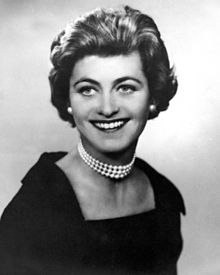
Certainly Jean Kennedy Smith, pictured above, accomplished much as did the Kennedys, it’s just that it could have been so much mo(o)re. (Alas Senator Edward Moore Kennedy, granted relatively long life and the “more chances,” male gender did the most).
She was Ambassador to Ireland, a diplomat and an activist. Most of all, she was part of family and ideal, certainly one of privilege, but tilted for whatever reason to help those less and far less fortunate.

In England, (1939), The Kennedy family: left to right are Eunice, John, Rosemary, Jean, Joseph P. their father, Edward/Ted, Rose their mother, Joseph Jr. Patricia, Robert and Kathleen.
It is a photo by Dorothy Wilding.

