The words from Joe Garagiola were “as expected the starters for game 1 of the 1965 World Series are Don Drysdale for the Dodgers and Jim “Mudcat” Grant for the Minnesota Twins.
There was no explanation, at least none in the pre game comments as to why Dodgers’ ace Sandy Koufax (Don was no slouch, having won 23 games, but clearly Sandy would have been the game 1 starter) was not the game 1 starter.
The reason was that Sandy decided not to pitch as game 1 fell on Yom Kippur. It is interesting, as Artie Johnson Might say “verrry,” that the reason Koufax was not pitching is not cited, at least not at the “top” pf the broadcast.
It has been too long since a “What’s My Line?” episode appeared here. This is much needed after my perhaps too somber viewpoint about recent events.
Maybe the best approach is to quote, the one and only Michael Santasieri, who once, when asked what he thought of recent events, retorted “they were (very) recent.”
George Burns is the mystery guest and in great form, on this February night, eight months before his beloved wife and great comedic partner, Gracie Allen passed away.
The panelists on either end were Dorothy Kilgallen and Bennett Cerf. In between in both seating and introduction, Martin Gabel introduced his wife, Arlene Francis.
John Charles Daly was the show’s host.
Enjoy watching.
The Los Angeles Dodgers won a World Series opener for the second time in 4 seasons, a third in 32 completed, and just the fourth, (#32 Sandy Koufax set a then World Series strikeout mark in winning the 1963 opener vs a great Yankees team, that had “a bit” more hitting prowess than the woeful hitting Rays, who are a very good team, but simply not hitting) in 57–winning (8-3) vs Tampa Bay in game 1.
A very cocky, but tremendous player, Cody Bellinger again put L.A. ahead to stay, this time with a 2RHR/B4, one out after losing pitcher Tyler Glasnow yielded a leadoff walk to Max Muncy.
Walks undid Glasnow and the Rays in the bottom of the 5th, after Kershaw, who now again is getting far too much praise, as if his excellent 6 innings, 1 run, 2 hits performance, erases a career of post-season failures–maybe it does, but not in my book—did give one back T5.
Mookie Betts walked and stole second, talked incessantly with the Rays’ Willie Adames and was nearly picked off. NLCS MVP, Corey Seager drew his third walk and when “Just” Turner fanned, Betts and Seager “double stole.” (I did not have sound on, but in listening to highlights, Smoltz seems to credit Turner for the advance, “even though he struck out.” I had a nice little sign once, that said “put brain in motion before moving mouth” and Smoltz needs to adhere to that, more than just about any person who ever walked this earth). Muncy’s fielder’s choice, not shown with any clarity by Fox cameras, tuned Betts and eventually 3 more runs yielded an L.A. opener.
The Rays are (0-2) in World Series openers while the Dodgers are (7-14), (5-7) as L.A. and (2-7) when in Brooklyn.
In 40 percent of the 20 previous Dodgers’ W.S. the game 1 loser came back to “title,” 4 times vs the Dodgers (the Yankees doing so in ’52,’56 and ’78 while the Astros did so in 2017, something the Dodgers are still making excuses about. All 4 of those times, the first two in Brooklyn in a game 7 and the next two in respective games 6 and 7, the Dodgers were ousted on their home field) and 4 times favoring the Dodgers (’55, ’59,’65 and ’81–the first and last of those in 7 and 6 respectively clinched at Yankee Stadium while ’59 in 6 was at the White Sox and ’65 was at Minnesota and the only home World Series loss ever suffered by the Twins, victors in their other 11 home World Series tilts).
The oddsmakers do not give the Rays much chance of making 9, as L.A. is nearly a 4 to 1 series choice and even a 3 to 2 “fave” in #2 tonight, despite the Snell/T.B. vs Gonsolin and L.A. staff pitching matchup.
I have seen this “handwriting on the wall” for some time, though it got murky, as Atlanta led 3 games to 1 and seemed to lead (3-0) in #5.
However, a player named Ozuna left third too soon.
I once loved the Dodgers, still do re Sandy and those teams. (By the way, while Lou Johnson, Ron Perranoski and Jay Johnstone were not Whitey Ford–their aggregate contribution was immense, helping the club win titles in ’63, ’65, and ’81. The Yankees got a tribute onto their uniforms the same day, Whitey died. In the weeks since Lou, Ron and Jay died couldn’t the Dodgers have done similar?) but said no more after Lasorda stubbornly and frankly stupidly, pitched to Jack Clark. That cost the Dodgers any chance of winning the ’85 NLCS.
My father said he heard it before, as far as me giving up on this team, one whose fortunes and more misfortunes, I followed via “every half hour” sports reports on either WINS or WCBS, before each became far right and in better days. Yet I did stop rooting for them and as usual, I pay the price–this time seemingly emotional and not financial.
Also on October 15th, the anniversary (#32) of the L.A. win on Gibson’s HR in #1/’88 W.S. the Dodgers lost and fell down (3-1) vs Atlanta. They recovered and on the October 18th/43rd anniversary of Chambliss and of course Reggie’s 3 HRS to 6 L.A. and devastate me in ’77–the Dodgers won the NLCS with a 7th game triumph vs the Braves.
In another “reverse” outcome regarding the Dodgers, in their only other (maybe baseball’s only other) Tuesday October 20th, World Series opener, the Dodgers lost game 1 of the 1981 World Series to the Yankees. They recovered and won that World Series, their first after a 16 year drought.
Now they are top heavy “faves” to end a drought of double that time, having last won the World Series in 1988.
Thank you for your indulgence but alas what a year this has been, certainly not a good one!

Cody Bellinger, pictured above. Bob Welch’s #.
Again you can only get this here.
Unofficially, the Atlanta Braves have been in 20 post-season series that had a Sunday game and only in 1995, the year in which the Braves won what is the lone Atlanta major professional North American sports league crown in 179 aggregate, completed seasons (Braves (54) ’66-2020, with no conclusion to the ’94 season, Falcons also (54) and (1-4) at this point having won Sunday, the day the Braves lost as is their Sunday, if not almost entire ‘offs history. Hawks (52) ’69-2020 and the two now “elsewhere” NHL teams, the Flames (8) (’73-’80) and the Thrashers (11) 2000-2011 with no NHL season in 2005), did the Braves both win a/the Sunday game and the series.
They won game 2 of the ’95 World Series on a Sunday night and the title, that one time in 6 games, clinching on a Saturday night.
They are (4-17) in Sunday post-season games, having been eliminated from post-season play 6 times after Sunday losses (’82 NLCS, ’91 World Series, ’01 NLCS and in “div” series (’03-’05), the latter 3 all vs teams managed by Dusty Baker (’02) or vs Baker’s current team, Houston (Astros), who were ousted also in a 7 game LCS on Saturday night. (Alas in and speaking of “Saturday Night” there was an “Astro” named dog in a sketch, the night T.B. 7’d the Astros.
Only in the ’91 World Series did the Braves play 2 Sunday games in the same series, losing #’s 2 and 7 to the Twins. That year, the Braves lost a Sunday game 4 to the Pirates, as they also did in the ’92 NLCS, but each time Atlanta won that series only to lose the World Series.
The Los Angeles Dodgers, trying to join the NBA Lakers as simultaneous champions for a third time (’81 W.S.-’82 NBA and ’88 NBA followed by ’88 W.S.) will meet the Tampa Bay Rays, who hope to join the NHL Tampa Bay Lightning as simultaneous/same city title holders.
L.A. won the franchise’s 21st pennant with a World Series to follow, (4-3) (4-3), and overcame a (3-1) series deficit in doing so.
Tampa Bay (Rays) will be seeking its first title, in what will be their second World Series appearance. The Dodgers are (6-14) in previous World Series, (1-7) as Brooklyn and (5-7) as Los Angeles.
Only here: “The game 4 indicator,” i.e. the winner of game 4 wins the series, “failed” for just the third time in a combined 27 Dodgers’ LCS and World Series starting in 1955 (the other LCS in which the game 4 winner did not win the series was in ’17 when the Cubs stayed alive in #4 but were 5’d by L.A. the next night).
In World Series play, starting with the Dodgers’ 1955 crown, their lone such accomplishment while in Brooklyn, the game 4 winner of a Dodgers’ W.S. failed to title, also only in 2017, when Houston (Astros) took the crown, though losing game 4.
The Tampa Bay Rays advanced to their second World Series with a (4-2) win vs the Houston Astros in game 7 of their ALCS.
It will be the Rays’ second such “appearance,” having lost to the Philadelphia Phillies in 2008.
Meanwhile the L.A. Dodgers won (3-1) vs Atlanta in game 6, to force a decisive 7th game of their NLCS tonight.
The winner will meet the Rays in the World Series, which begins on Tuesday.
Both LCS were extended yesterday, one in historic fashion as the Houston Astros joined the 2004 Boston Red Sox, who went on to not only win game 7, but sweep the subsequent World Series, for the franchise’s first title in 86 years, as the only baseball teams to force a game 7 in a series they trailed 3 games to none.
Tonight in #7 San Diego in front of cardboard fans, two hurlers that combined in both Astros’ game 7 wins as they won their lone title in 2017, Lance Mc Cullers Jr. for Houston and Charlie Morton for Tampa Bay (Rays) are the starting pitchers, with much bullpen work expected.
Astros’ manager Dusty Baker, so often denied as he still is seeking a first managerial World Series win and bidding with a (29-31) team did win a title as a player in the strike marred 1981 season.
Then Baker’s Dodgers faced elimination 5 times, 3 times in non decisive games and that is the same number of non decisive games Baker’s Astros have won so far in these ‘offs. Tonight is the decisive 7th game, with the winning team moving into the World Series, which starts Tuesday night in Arlington or near it, Texas.
Their opponent is still undecided as yesterday the Dodgers’ Will Smith hit a 3 run home run vs the Braves’ Will Smith, in the first such “confrontation” in post-season annals, keeping the top ranked Dodgers’ hopes alive.
Atlanta (Braves) still lead the NLCS, 3 games to 2. Yesterday’s game was the 10th in a Braves’ series that stood 3 games to 1 either way. In the first 8 (1948 World Series, 1958 World Series, 1992 NLCS, 1992 World Series, 1995 World Series, 1996 NLCS, 1998 NLCS and 1999 NLCS) the team trailing (3-1) won game 5. The trailing Dodgers’ win yesterday made it 9 of 10.
In 2001, the lone time it happened, the Arizona Diamondbacks wrapped up the NLCS vs the Braves with a game 5 win.
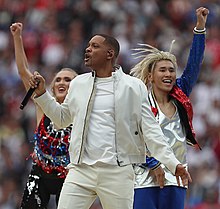
Another Will Smith, an actor, who portrayed sports great and then quite a bit more, Muhammad Ali in what is a fine acting career, is pictured above.
Also, let’s cite William Smith, who portrayed the villain type, “Falconetti” in the great mini-series “Rich Man Poor Man,” based on the Irwin Shaw novel, that among other things, foresaw malls and associated demographics.
Yesterday was a day, Carlos Correa whacked the second ALCS game ending home run of his career (in #2 ALCS last year and he also had a game ending double in #2 ALCS in ’17, a year/season in which the ‘Stros won their lone title), to force a 6th game with “T.B.” ahead (3-2) vs Houston, the Atlanta Braves “bombed” perennial ‘offs failure, Clayton Kershaw in a big 6th inning en route to a (10-2) win and a (3-1) series lead, vs the top seed, L.A. Dodgers.
The Braves are in their 10th best of 7 NLCS (they were swept in 3 straight games by eventual title winning Mets (’69) and Cards (’82) teams in best of 5 NLCS) and have a (3-1) series lead for the second time.
In ’92 up (3-1) in the series vs Pittsburgh (Pirates) Atlanta needed Francisco Cabrera’s all-time type clutch two run single to win in game 7 while in ’99 they actually led the Mets (3-0) and needed an extra inning game 6 win to take the series.
Teams down 3 games to 1 in Braves’ NLCS are (4-1) in game 5 as Atlanta won games (5-7) to take the Cards in ’96 and forced a 6th game in a series in which they trailed (3-0) to San Diego in 1998. Both the ’96 Braves and ’98 Padres, who won that aforementioned ’98 NLCS in 6, lost to the Yankees in the subsequent World Series.
Only in ’01 when the Arizona Diamondbacks secured the second of three Sunday night series clinchers (they were (4-0) in Sunday games that post-season, certainly a mark that has not been topped and likely not matched (not researching it) for a post-season record on a particular day) that culminated in a World Series crown, did a team up (3-1) in a Braves’ NLCS win said series in 5 games.
Meanwhile the Houston Astros have joined the referenced above ’98 Braves and ’99 Mets as 3 of the four teams in the now 39 times a team has trailed (3-0) in a best of 7 (for that matter best of 9 series which were played in 1919, 1920 and 1921) to have forced a 6th game.
As cited both the ’98 Braves and ’99 Mets lost in 6 to teams that lost the subsequent World Series. One team, the only one to ever accomplish the feat in baseball or basketball annals, the 2004 Boston Red Sox, not only overcame a (3-0) ALCS deficit to “7” the Yankees, again the only such occurrence, but also proceeded to sweep the Cardinals in the subsequent World Series and win their first title in 86 years, Three other Red Sox titles have followed.

Above a program from the World Series played 110 years ago and won by the Philadelphia Athletics under Connie Mack and with an elephant as their symbol vs the Chicago Cubs (hence the bears in the picture).
That W.S. was the first of only three, in which a team trailing (3-0) won game 5 (the others were the Giants in 1937 behind the great pitcher, Carl Hubbell, but the Yankees titled in #5 and the ’70 Reds, now 50 years since “The Big Bopper, ” Lee May, later traded for Joe Morgan, whom we lost this week, hit a 3rhr, that meant no Orioles’ celebration on a day H. Gross’ father died. Alas, the O’s won #5 behind Mike Cuellar with Brooks Robinson the World Series MVP. Another “Big Bopper,” real name J.P. Richardson was tragically killed in a plane crash over 61 years ago that also took the lives of two other musical greats, Buddy Holly and Richie Valens.)
Jack Coombs won his 3rd W.S. game of 1910 as the A’s won game 5. In addition to the 3 (one the ongoing 2020 ALCS) LCS in which a team trailing (3-0), at least forced a 6th and the ’04 Red Sox incredible series win, two other teams, the ’16 Toronto Blue Jays and ’17 Chicago Cubs forced 5th games down (3-0) in an LCS.
Both the ’16 Indians who were 7’d by the Cubs, who won their first crown in 108 years in doing so and ’17 Dodgers, also 7’d, by you guessed it, the Astros, won game 5/LCS but lost the subsequent World Series.
No team has ever led an LCS (3-0), lost game 4 and won that year’s World Series. The Yankees lost that LCS, the ’98 Padres and ’99 Braves needed 6 games to win the LCS, they led (3-0) and then lost the World Series. Both the ’16 Indians and ’17 Dodgers won the referenced LCS in 5 games but lost in the subsequent World Series.
Let’s see what fate awaits the 2020 Rays.
Nobody even if they are great, (Joe Buck, at best is adequate) should have the power and opportunity this man was given, first being Jack’s son and then gaining even more, from his pushy mother. (If you think this “attack” is below the belt, maybe it is, but listening to Buck and others worse, have all kinds of “nuts” implications, not the least of which manifesting in a rising venom. Believe me, I could have written worse.)
I was faked out by the fact Buck, who gets to do his 23rd World Series starting Tuesday will be on the much hyped, yet not all that important even in a football sense, INTERDivision G.B. at T.B. this Sunday.
That means if somehow Atl/L.A. baseball goes 7, the Emperor (Buck) would miss a game 7. That can not happen, I thought and by a slim margin, still do. However, I was so wrong, as baseball got wins from its trailing LCS teams last night.
As bad as Buck is, John Smoltz is worse, even much worse. He can’t take the time to state things correctly as he never shuts up. Early on, but after an ELEVEN run, L.A. top of the first, Smoltz in full “whore mode,” not only told us it is not easy to pitch with such a lead and the usual “B.S.” to try and get us to stay tuned, he said L.A. was within one OUT of victory the night before.
No John, they were within one RUN and that is quite a difference!!
From the perhaps vitriol to the facts: As both Brooklyn, where they were but (1-8) in post-season series, all World Series–but were never swept or down (3-0), and L.A. the Dodgers have been in 33 best of 7 series (20 World Series with a (6-14) mark and this is their 14th LCS, (7-6 in those 13) and were swept or down (3-0) only once, that in the 1966 World Series, vs the Baltimore Orioles.
It still looks as though Fox will have the longer or at least, as long LCS as TBS, for the 13th time in 14 such possibilities, however, Houston/TBS stayed alive with a win vs Tampa Bay, in game 4.
The TBS broadcast is a slower version of hell. Brian Anderson called “dull as dishwater” here, years back, is no better. Ron Darling did his thing KOing the Yankees for at least the 5th time, so let him go back to ripping former teammates such as Len Dykstra, who unlike Darling, came through in big games. Someone named Jeff Francoeur, is a totally unnecessary third person.
Cosell/ Gifford or Jackson/ and Meredith worked, so did Enberg/Packer and Al McGuire, but no other such configuration did/does or likely ever will.
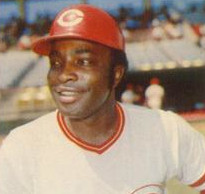
Joe Morgan, who could do it all on a baseball field and often elsewhere all the while, maintaining eloquent class, died far too young, at the age of 77, days back.
Having not seen the 1961 New York Yankees and arguably even if I had, Morgan was part of the best baseball team I ever saw, the so called “Big Red Machine,” especially the 1975 and 1976 “models.”
Those Cincinnati Reds teams did what similar, but not quite as great Reds’ teams failed to do, despite first place finishes in ’70 (before the man they called “Little Joe” arrived in Cincinnati along with Jack Billingham and Cesar Geronimo, as Bob Howsam engineered a great trade with Houston (Astros), ’72 and ’73 and a fine effort in ’74, namely win it all.
It was as a 2 time National League MVP and more important World Champion that Mr. Morgan (cue Ray and Bruno Sammartino) took the time to listen to me, via the phone in 1977. He hoped things would go well for me. That did not manifest, and now Joe is dead at age 77, a sixth great (saying Hall of Famer means so much less, as ‘they’ continue to keep one of Joe’s teammates on those great Reds’ teams, Pete Rose out of there, which is an utter disgrace) from better baseball and days, that died this year and fifth in a roughly (rough is the operative word) six (6) week period. (Al Kaline who wore #6 died months back, followed by Tom Seaver, Lou Brock, Bob Gibson, Edward “Whitey” Ford and Joe Morgan).
I will always remember Joe’s kindness, even as I sometimes move my elbow the way he did at bat.
The looping hit to win the classic ’75 World Series called by Curt Gowdy and one Joe said he would not have attained years earlier, was THE highlight of a great career.
So many others could be cited, I will mention B1, game 1, ’76 World Series and Joe homered off Doyle Alexander, to set the tone for a Reds’ sweep of the Yankees, a series in which Cincy trailed for at most 4 innings, probably less.
I repeat the obvious and what you have read, Joe could hit, even for power, walk, steal a base, field and think! What a great player and man.
The angels are moving their elbows in greeting you Joe, but it happened too soon.